

Founded by a Nepali and a Dutchie. The best of both worlds.
No mass tourism. Just honest, personal connection. Before, during and after your trip.
By hiring local guides and porters, you help them earn a good income. Close to home, not overseas.
In a nutshell
The Langtang Panorama Trek to Tserko Ri Peak takes you into the heart of the Langtang Valley in a short amount of time. This is one of the most beautiful trekking regions near Kathmandu. From the city, we drive to the start of the route. From there, we walk through dense forests of pine, bamboo and rhododendron, climbing gradually to the alpine meadows of Kyanjin Gompa, the last Tibetan village in the valley.
The highlight of this trip is the ascent of Tserko Ri (4,985 m / 16,355 ft). A solid climb, but one that pays off twice over. From the top, we have a 360-degree panorama of the surrounding Himalayan peaks. On clear days, you can even see the Tibetan plateau.
Although the Langtang Valley is relatively close to Kathmandu, it is less well known than the Everest and Annapurna regions. And that is exactly what makes it so special. It’s quieter, authentic and surprisingly diverse in landscape.
Note: This is a suggested itinerary. Your trip is custom-made to fit your wishes and experience. Tell us what you’re looking for. We’ll take care of the rest.




Spring (February through April) and autumn (mid-September through November) are the best seasons for this trek. The weather is stable, the skies are clear and the chance of snow on Tserko Ri is at its lowest.
Autumn is slightly busier. Spring is a little quieter, with rhododendron forests in full bloom along the route.
You don’t need to be a top athlete, but this trek does ask something of you. Think 4 to 7 hours of walking per day, several days in a row, at altitude. If you’re used to multi-day mountain hikes, you’ll generally be fine. The day to the summit of Tserko Ri (4,985 m) is the most demanding section: steep and possibly icy.
Not sure? Just get in touch. We’re happy to look at your experience level together and see whether this route suits you.
This is a suggested itinerary. A plan that shows what a trek like this can look like. Not how it has to go.
Want more time to acclimatise? Or prefer an extra day in Kyanjin Gompa? No problem. Want to combine the trip with a few extra days in Kathmandu before or after the trek, or perhaps a visit to another region in Nepal? That’s possible too.
Get in touch and we’ll create a trip that fits you.
What’s included
The price of this trip is per person, based on two people travelling together and sharing a twin or double room.
Are you travelling solo or with a larger group? We are happy to make you a custom price proposal. Just send us a message and we’ll get back to you with the options.
Included in this trip
- All required trekking permits
- Licensed, English speaking trekking guide (salary, transport, accommodation, meals, gear and insurance)
- Experienced mountain porter (salary, transport, accommodation, meals, gear and insurance)
- Private transport from Kathmandu to the trailhead and back
- All teahouse accommodation during your trek
- Breakfast, lunch and dinner during your trek
- 24/7 support from the By Mountain People team throughout your trip
- Booking secured through VZR Garant
- VAT and tourist service charge
Not included
- Water, hot or cold drinks, alcohol, etc.
- Travel health insurance covering rescue and evacuation — mandatory in Nepal
- All other expenses not listed under 'Included'
Day-to-day program
This is an example itinerary. It shows you how a trip like this is typically structured, day by day. Because we tailor every journey to your wishes and experience, the exact program may vary.
Note: walking times are indicative and depend on the pace of the group.
Early in the morning we board the bus to Syabrubesi, the starting point of the trek. After arriving and having lunch, we take our first steps towards Bamboo. Along the way, the landscape gradually opens up and the Himalaya reveals itself. We spend our first night in the mountains in Bamboo, a simple Tamang village surrounded by nothing but nature.


Prefer a jeep?
That's possible. It's faster, a bit more flexible and includes some great stops along the way. Get in touch for details.
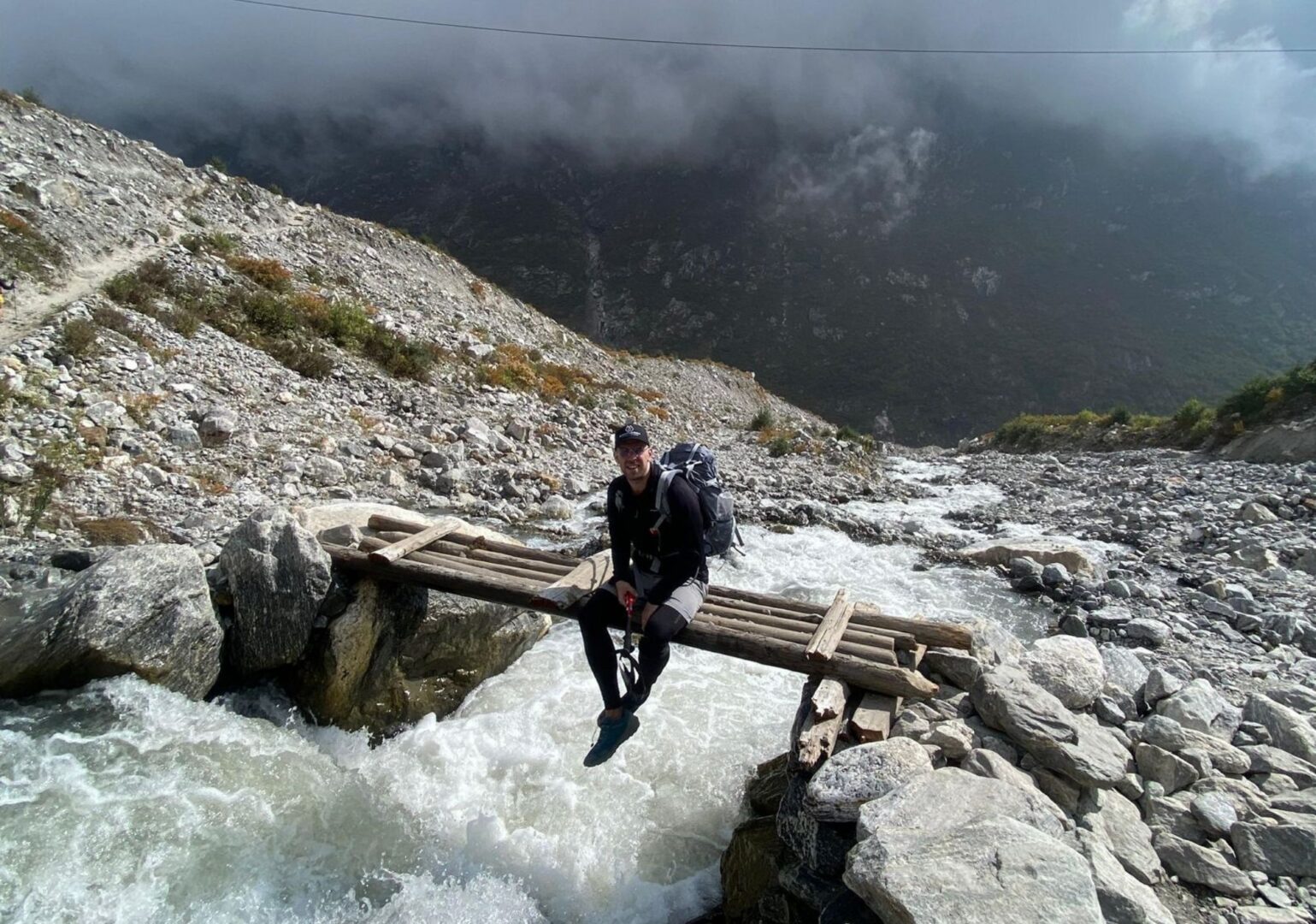
After an early breakfast beside the rushing river, we set off on a long but rewarding day. The trail follows the Langtang Khola upstream through lush forest. We walk mostly in the shade, which makes the climbing much more pleasant. Along the way, there’s a good chance of spotting monkeys, and various bird species, and possibly wild honey in autumn. We reach Ghoda Tabela early in the afternoon, with plenty of time to rest and explore the surroundings.


From 3,000 metres, the first views of the surrounding peaks start to open up. The trail is relatively peaceful, though fully in the sun. Sunscreen and sunglasses are not a luxury here. Along the way, we pass more and more Tibetan villages, with small restaurants and locals in traditional dress. The Langtang Valley reveals itself here for the first time.


Did you know …
In April 2015, a 7.8 magnitude earthquake triggered a massive avalanche from Langtang Lirung. It buried the entire village under millions of tons of rock and ice. More than 240 people lost their lives here, both locals and trekkers. When you walk through Langtang Village today, you're not walking through the original village. The community rebuilt on a new site, slightly higher up the valley and away from the couloir that channelled the destruction in 2015. A more sheltered spot. Not the old place. The mani wall near the trail carries the names of everyone who died here. Take a moment when you pass it.
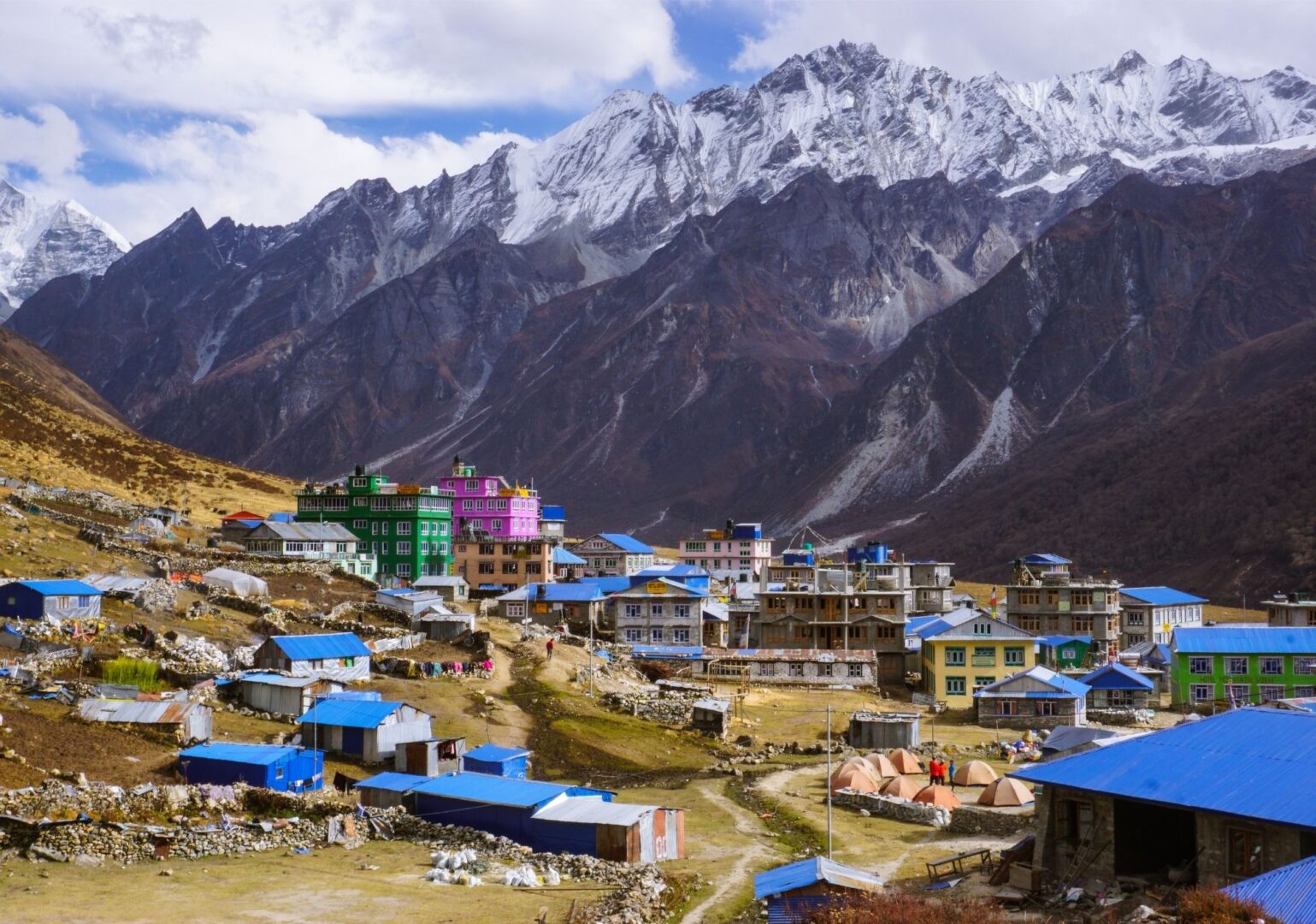
Today is an easier day, and that will probably feel good after the previous stages. After breakfast, we walk to Kyanjin Gompa in around four hours, the last village in the valley. After lunch, we take a short walk to explore the village. Kyanjin Gompa is a remarkable place: an ancient monastery, surrounded by a glacier and high mountain peaks.


🧀 Did you know …
In 1955, Swiss dairy expert Werner Schulthess came all the way to Kyanjin Gompa to set up Nepal's first commercial cheese factory. At nearly 3,900 metres above sea level. The milk comes from female yaks, known locally as naks, grazing the high pastures around the village. The cheese is hard, nutty and rich. You can visit the factory, watch the process up close, and buy a block to take with you. The best snack for the walk back down.
Active rest: a few ideas for the afternoon
Today is a short day. That doesn’t mean lying still. Walking up to a higher point during the day, then back to the lodge for the night, helps your body adjust to the altitude. Below you’ll find a few options for the afternoon. Pick what suits you, or take it easy at the lodge.
Visit Kyanjin Monastery
The monastery is the spiritual heart of the valley. It is around 300 years old, and the thangka paintings on the walls were brought here from Tibet some 400 years ago. Villagers, not monks, take turns opening and maintaining it. Step inside in the early morning, when butter lamps are still burning. And walk around it clockwise, as the locals do.
Hike Kyanjin Ri
The classic half-day hike from the village. You climb to 4,773 m / 15,659 ft and look out over Langtang Lirung, Dorje Lakpa, and the entire valley below. The trail is steep and short. On a clear day, you can see all the way to Shishapangma across the Tibetan border.
Hike to the glacier
A flatter walk north of the village, along the moraine of the Langtang Lirung glacier. No big climb, just you and the ice. Every now and then, you can hear the glacier crack and shift beneath the surface. A reminder that this landscape is alive.
An early start today. We set off around 5:00 AM towards the summit, with breakfast packed in our bags. The climb is demanding: over 1,200 metres of elevation gain in around five hours. But at the top, a 360-degree panorama awaits over the Langtang peaks, Dorje Lakpa, Shishapangma and on clear days even the Tibetan plateau. After a well-earned rest on the summit, we descend back to Kyanjin Gompa.


After an early breakfast beside the rushing river, we set off on a long but rewarding day. The trail follows the Langtang Khola upstream through lush forest. We walk mostly in the shade, which makes the climbing much more pleasant. Along the way, there’s a good chance of spotting monkeys, and various bird species, and possibly wild honey in autumn. We reach Ghoda Tabela early in the afternoon, with plenty of time to rest and explore the surroundings.


This is the last day of walking. We descend further to Syabrubesi, with a well-earned lunch along the way. We’ve completed a beautiful multi-day trek through the Himalaya, with the cherry on top being the summit of Tserko Ri.
Return to Kathmandu
Prefer to take an evening jeep back to Kathmandu? That's possible. Get in touch for details.

After breakfast, we board the bus back to Kathmandu.
Walking & pace
We start the day early. Breakfast is at 7 AM, and we leave the lodge around 8. The morning hours are when the air is freshest and the views are at their clearest.
We stop for lunch towards the end of the morning. Lunch is freshly prepared, warm and unhurried. It can take a while for the food to come out, but that is part of the rhythm. You sit down, drink something, rest your legs and refuel for the afternoon.
In the afternoon, we usually walk a little further to reach the lodge for the night. By around five, we sit down for an early dinner. We order breakfast for the next morning at the same time, so it is ready when we are.
Throughout the day there is plenty of time to drink water, reapply sunscreen, take photos and simply look around. The mountains are not in a hurry, and neither are we.
Route

Altitude
About this trip
This trek takes you through the foothills of the Langtang range. You walk an average of 5 to 6 hours per day, without high passes along the way. We have built no formal rest days, but 2 lighter walking days
The paths are mostly well-maintained mountain paths. Expect stone steps, rocky sections and possible snow or ice on the higher sections.
Quick facts
- Route type: out-and-back
- Total distance: approximately 80 km / 50 mi
- Starting point: Syabrubesi (1,462 m / 4,797 ft)
- Highest point: Tserko Ri (4,985 m / 16,355 ft)
- End point: Syabrubesi (1,462 m / 4,797 ft)
- Number of trekking days: 7
- Highlights along the way:
- Langtang Village
- Kyanjin Gompa
- Tserko Ri
Practical
Everything you need to know before you go. Below you’ll find answers to the most frequently asked questions about this trip. Can’t find what you’re looking for? Feel free to reach out.
Altitude sickness can affect anyone. Regardless of age, fitness or experience. Even the most seasoned mountain walkers can struggle with it.
The best prevention is going up slowly. That’s why our itinerary deliberately includes acclimatisation days where needed. This gives your body time to adjust to the altitude.
Drink plenty of water and listen to your body. Headaches, dizziness or nausea are signals to take seriously. Our guides are trained to recognise symptoms and will adjust the programme if necessary.
And if you do get altitude sickness? Descending is the only right choice. No debate, no hesitation. That’s not failure. That’s wisdom.
During the trek you sleep in teahouses: simple mountain lodges with firm mattresses, pillows and blankets against the cold, and dal bhat in the shared dining room.
Expect a twin room, a shared bathroom and cold water. A hot shower or wifi is sometimes possible, usually for a small extra fee. Charging your electronics is always possible, sometimes for a small fee. And then there is the warm fire in the dining room, friendly hospitality and views no hotel can match. This is the Himalaya.
PS: even though pillows and blankets are provided, we recommend bringing your own warm sleeping bag. The nights at altitude get cold, and your own bag makes a real difference. After booking, you’ll receive a detailed packing list that helps you prepare for both the trek and the nights in the lodges.
The best preparation is simply walking. Preferably several days in a row, with a backpack and elevation gain. In the months before departure, build up to walking days of 5 to 6 hours. Work on your overall fitness with cardio training (running, cycling, swimming) and don’t neglect your legs: squats, lunges and stair training work wonders.
Just as important: break in your hiking boots in time. New boots in Nepal are a guaranteed recipe for blisters. Ideally, start your training 3 to 6 months before departure.
Once your trip is confirmed, you’ll receive all the practical information you need to leave well prepared. This includes visa information, recommended vaccinations and a detailed packing list.
After arriving in Kathmandu, there’s a pre-trip meeting with your guide. We go through the route, the latest weather forecasts and there’s plenty of room for any final questions. We also do a gear check, to make sure you have everything you need for the trip. Missing something, or not sure about your gear? We’ll head out together to sort it. Kathmandu has plenty of good outdoor shops. 😉
Nepal Trekking – Tserko Ri Peak, the Langtang Panorama Trek
- From Kathmandu quickly into the mountains
- A 360-degree panorama from the summit of Tserko Ri
- Tibetan Buddhist villages, gompas and prayer flags


What our customers have to say
Don't just take our word for it. Discover what travelers before you wrote about traveling with us.

Excited to start trekking to Nepal?
Explore sample treks in Nepal, ready for your personal touch. Customize these journeys to suit your preferences. Explore sample treks in Nepal, ready for your personal touch. Customize these journeys to suit your preferences.

